The rapid rise of AI content creation has sparked a wave of concern among writers, marketers, and digital creators worldwide. As we approach 2026, artificial intelligence is no longer just a supporting tool—it’s becoming an active participant in producing blogs, videos, and social media content. This shift naturally raises an important question: will human creators still be needed? In this article, we explore how AI writing tools are reshaping the industry, what roles are most at risk, and which skills remain uniquely human. By understanding the future of content creation jobs, AI automation, and digital marketing, you can prepare, adapt, and secure your place in an AI-driven world.
Worried about robots swiping your career? The rise of AI content has many content creators questioning their future. Artificial intelligence is rapidly changing how we approach content creation, from blog posts to social media updates. But what does this mean for your job security? Let’s explore the landscape of content creation in 2026 and how you can adapt to thrive in an AI-driven world.
The Current State of AI Content
AI’s impact on content creation is already significant. Tools like GPT-3 and others can generate text, images, and even videos with remarkable speed and efficiency. This capability raises legitimate concerns about the roles of human content creators. However, it’s essential to understand both the capabilities and limitations of AI in this field.
AI excels at tasks like:
– Generating initial drafts of articles.
– Creating social media posts from provided data.
– Producing product descriptions for e-commerce sites.
– Translating content into multiple languages.
These functionalities streamline content production, allowing businesses to scale their output without necessarily increasing human resources. This is where the anxiety for many content professionals begins.
Will AI Replace Human Content Creators?
The short answer is no, but the role is evolving. While AI can automate certain tasks, it lacks the creativity, critical thinking, and emotional intelligence that human content creators bring to the table. A study by Forrester predicts that while AI will automate 30% of existing jobs by 2030, it will also create new opportunities in AI management and oversight.
Here’s why human content creators are still essential:
– Originality: AI often regurgitates existing content, lacking true originality.
– Contextual Understanding: Humans understand nuances, cultural contexts, and audience sensitivities that AI struggles with.
– Creativity: AI can generate content, but it often lacks the spark of human creativity and innovation.
– Ethical Considerations: Humans can make ethical judgments about content, something AI cannot do.
AI Content: Augmentation, Not Replacement
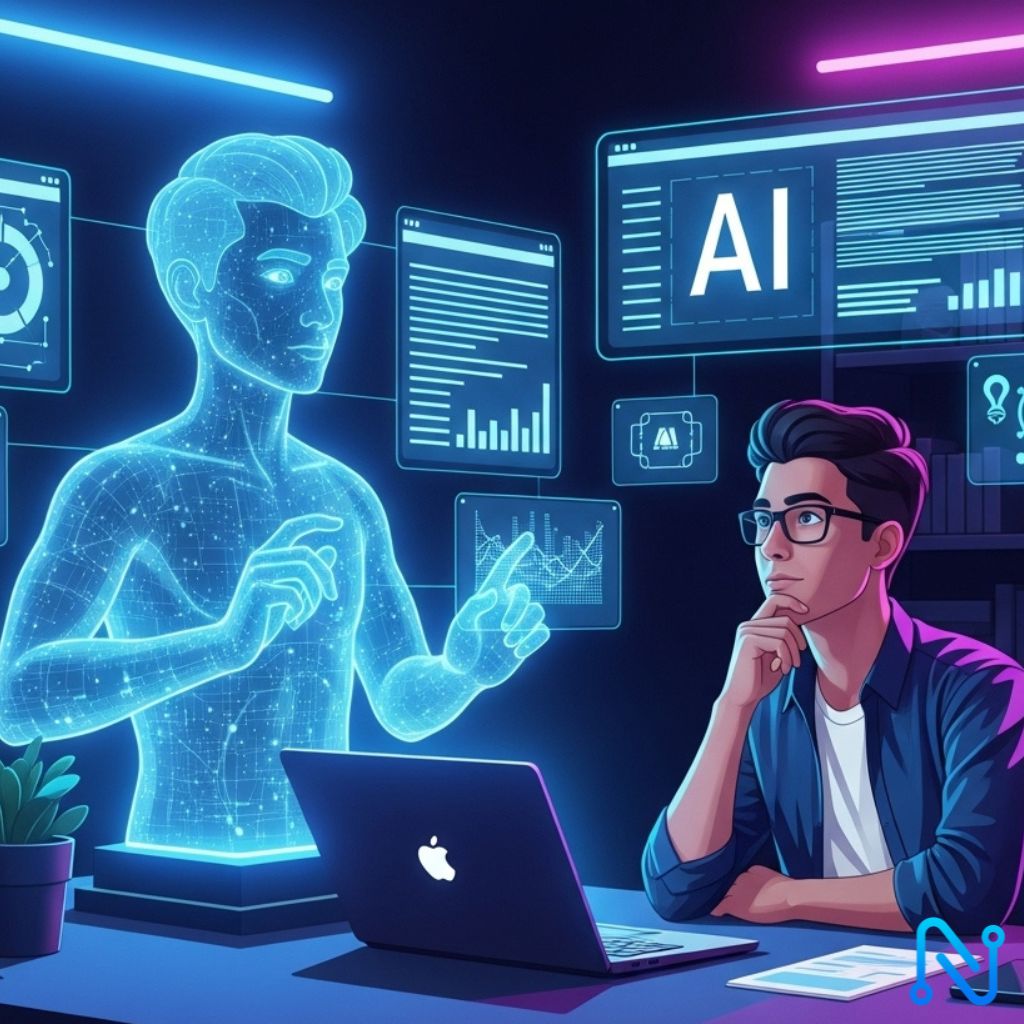
Think of AI as a tool that augments human capabilities rather than replaces them. In 2026, the most successful content creators will be those who can effectively use AI to enhance their work. This means learning to leverage AI tools for research, brainstorming, and initial drafting while still applying your unique human touch to the final product.
Skills You’ll Need to Thrive in 2026
To remain competitive in the age of AI content, focus on developing skills that AI cannot replicate. These include:
– Strategic Thinking: Understanding overall business goals and how content contributes to them.
– Creative Storytelling: Crafting compelling narratives that engage and resonate with audiences.
– Critical Analysis: Evaluating the quality and accuracy of AI-generated content.
– Emotional Intelligence: Connecting with audiences on an emotional level, building trust and loyalty.
– Adaptability: Staying current with the latest AI tools and techniques.
Adapting Your Content Creation Workflow
Embrace AI as a partner in your content creation process. Here’s how you can adapt your workflow to leverage AI effectively:
1. Use AI for Research: AI can quickly gather data and insights to inform your content strategy.
2. Generate Initial Drafts: Let AI create a rough draft, then refine and personalize it with your unique voice and perspective.
3. Optimize for SEO: Use AI-powered tools to identify relevant keywords and optimize your content for search engines.
4. Proofread and Edit: Always review AI-generated content for accuracy, grammar, and tone.
According to a report by McKinsey, companies that effectively integrate AI into their workflows see a 20% increase in productivity.
Future-Proofing Your Career
The key to future-proofing your career in content creation is continuous learning and adaptation. Here are some strategies to stay ahead of the curve:
– Take Online Courses: Platforms like Coursera and Udemy offer courses on AI, content marketing, and digital strategy.
– Attend Industry Conferences: Network with other professionals and learn about the latest trends and technologies.
– Experiment with AI Tools: Get hands-on experience with different AI tools to understand their capabilities and limitations.
– Build a Strong Personal Brand: Showcase your unique skills and expertise to stand out from the crowd.
The rise of AI content doesn’t mean the end of content creation jobs. It means a shift in the skills and strategies required to succeed. By embracing AI as a tool and focusing on uniquely human capabilities, you can thrive in the evolving landscape of content creation. The industry is evolving fast, you can check credible sources like HubSpot for the most up-to-date information.
AI Content Quality vs Human Creativity in 2026
As AI content creation tools become more advanced, a key question emerges: can machines truly match the depth and originality of human creativity? In 2026, AI can generate fast, structured, and grammatically clean content, but quality goes beyond speed. Human creators bring lived experiences, emotions, cultural awareness, and storytelling intuition that AI cannot genuinely replicate. While AI excels at pattern recognition, it often produces predictable outputs based on existing data rather than fresh perspectives. Readers still value authenticity, personality, and emotional connection, which remain uniquely human strengths. This is why brands increasingly rely on human editors to refine, personalize, and elevate AI-generated drafts into meaningful content.
Another critical factor is trust. Audiences are becoming more aware of AI-written content and can often sense when something feels generic or emotionally flat. Human creators understand tone shifts, humor, empathy, and context in ways AI struggles to master. In 2026, the highest-performing content is not purely AI-generated or purely human-written. Instead, it is hybrid content where AI handles structure and research, while humans inject creativity, voice, and purpose. This balance ensures content remains engaging, credible, and emotionally resonant.
New Job Roles Emerging from AI Content Creation
Rather than eliminating careers, AI content creation is reshaping the job market by introducing entirely new roles. In 2026, positions such as AI content strategist, prompt engineer, AI editor, and content quality auditor are becoming increasingly common. These roles focus on guiding AI systems, refining outputs, ensuring factual accuracy, and aligning content with brand voice. Companies now seek professionals who understand both creativity and AI workflows, creating new opportunities for content creators willing to adapt.
Additionally, human oversight has become more valuable than ever. AI tools require supervision to prevent misinformation, bias, and repetitive messaging. This has increased demand for editors who can fact-check, humanize language, and ensure ethical standards. Content creators who learn how AI systems work gain a competitive edge, as they can produce more content in less time while maintaining high quality. In 2026, job security depends less on writing speed and more on strategic thinking, storytelling ability, and AI collaboration skills.
How Businesses Are Redefining Content Strategy with AI
By 2026, businesses no longer view AI content creation as a cost-cutting shortcut but as a strategic asset. Companies use AI to analyze audience behavior, identify trending topics, and optimize content for search engines in real time. This data-driven approach allows brands to create highly targeted content that aligns with user intent. However, AI alone cannot define brand identity. Human creators play a crucial role in shaping messaging, values, and emotional appeal.
Modern content strategies now combine automation with human creativity. AI handles repetitive tasks such as keyword research, content outlines, and performance analysis, while humans focus on storytelling, campaign ideas, and long-term vision. This collaboration results in consistent, scalable, and engaging content ecosystems. Businesses that successfully integrate AI without losing their human voice gain stronger audience trust and higher engagement. In 2026, content success is no longer about choosing between AI and humans, but about using both intelligently.
The Future is Collaborative
In conclusion, while AI is undoubtedly transforming the content creation landscape, it is not poised to entirely replace human content creators by 2026. Instead, the future lies in collaboration. By focusing on strategic thinking, creative storytelling, and ethical considerations, you can not only maintain your job but also thrive in this evolving industry. Embrace AI as a tool to enhance your abilities, and you’ll be well-positioned for success in the years to come.
For more insights or collaboration opportunities, visit www.natiqtech.com.

I am a TOP RATED FREELANCER, digital creator, and tech enthusiast with over a decade of experience in online services like photo and video editing, graphic design, AI-driven content creation, SEO content writing, and digital media production.